


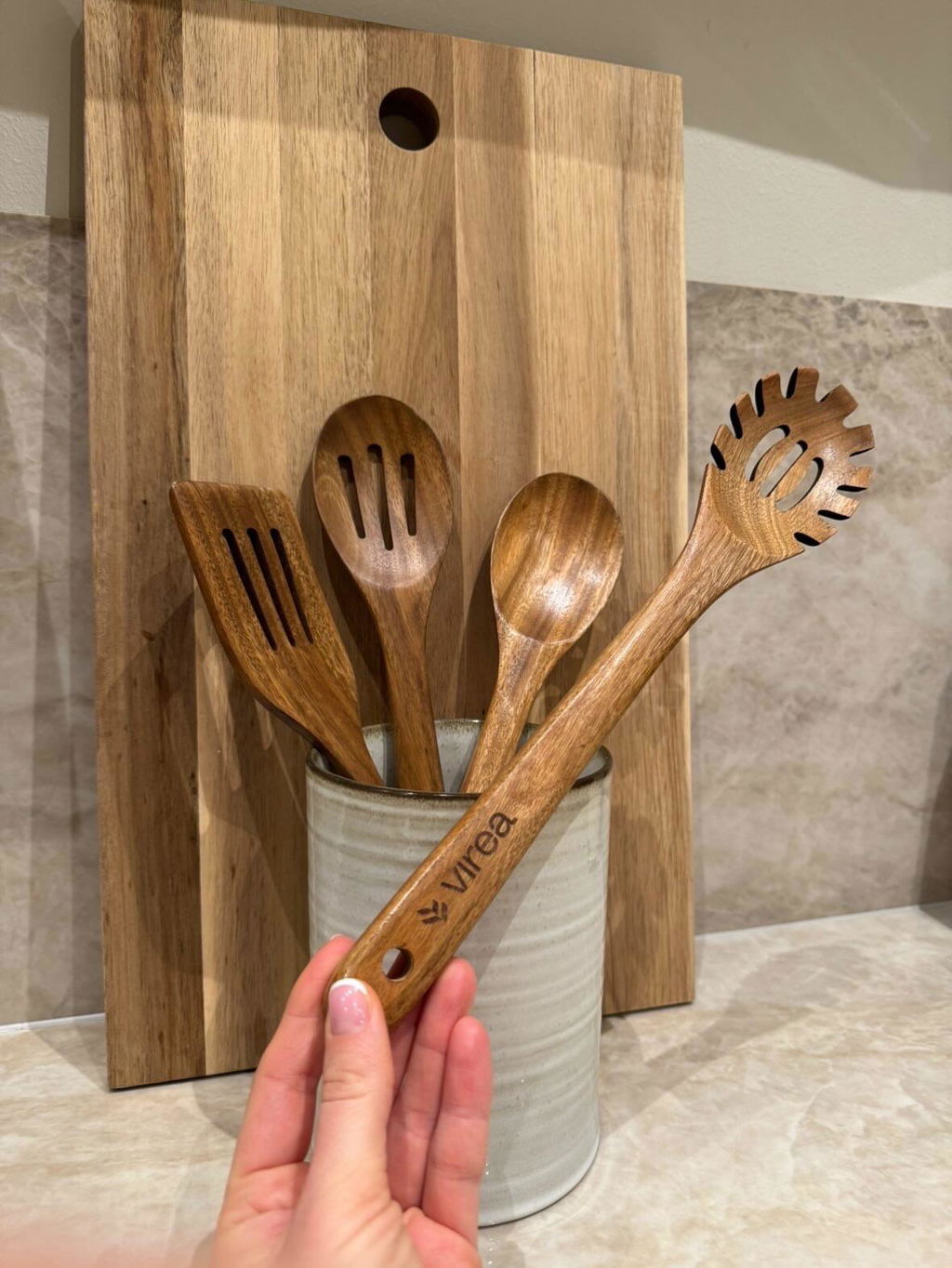
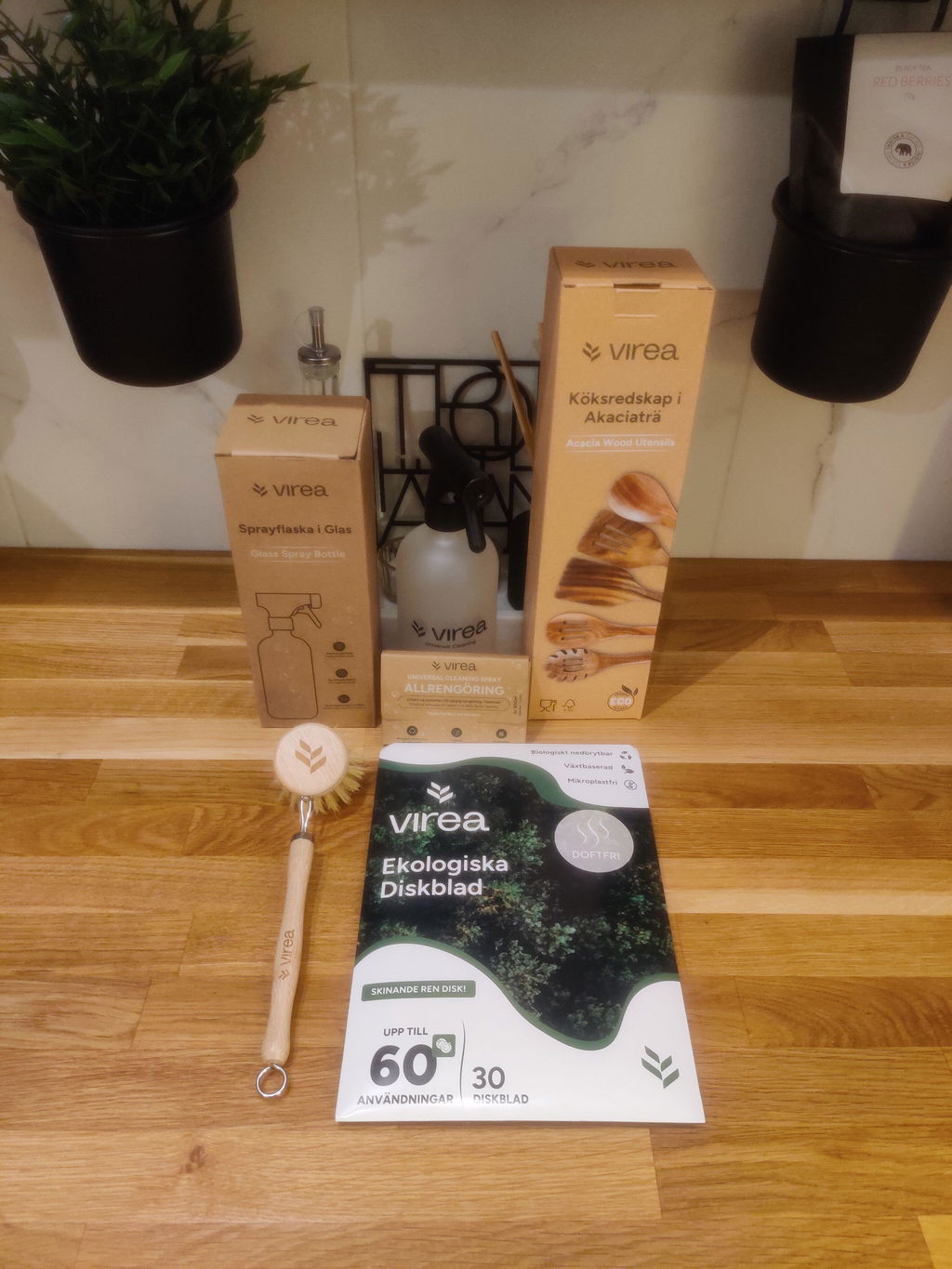
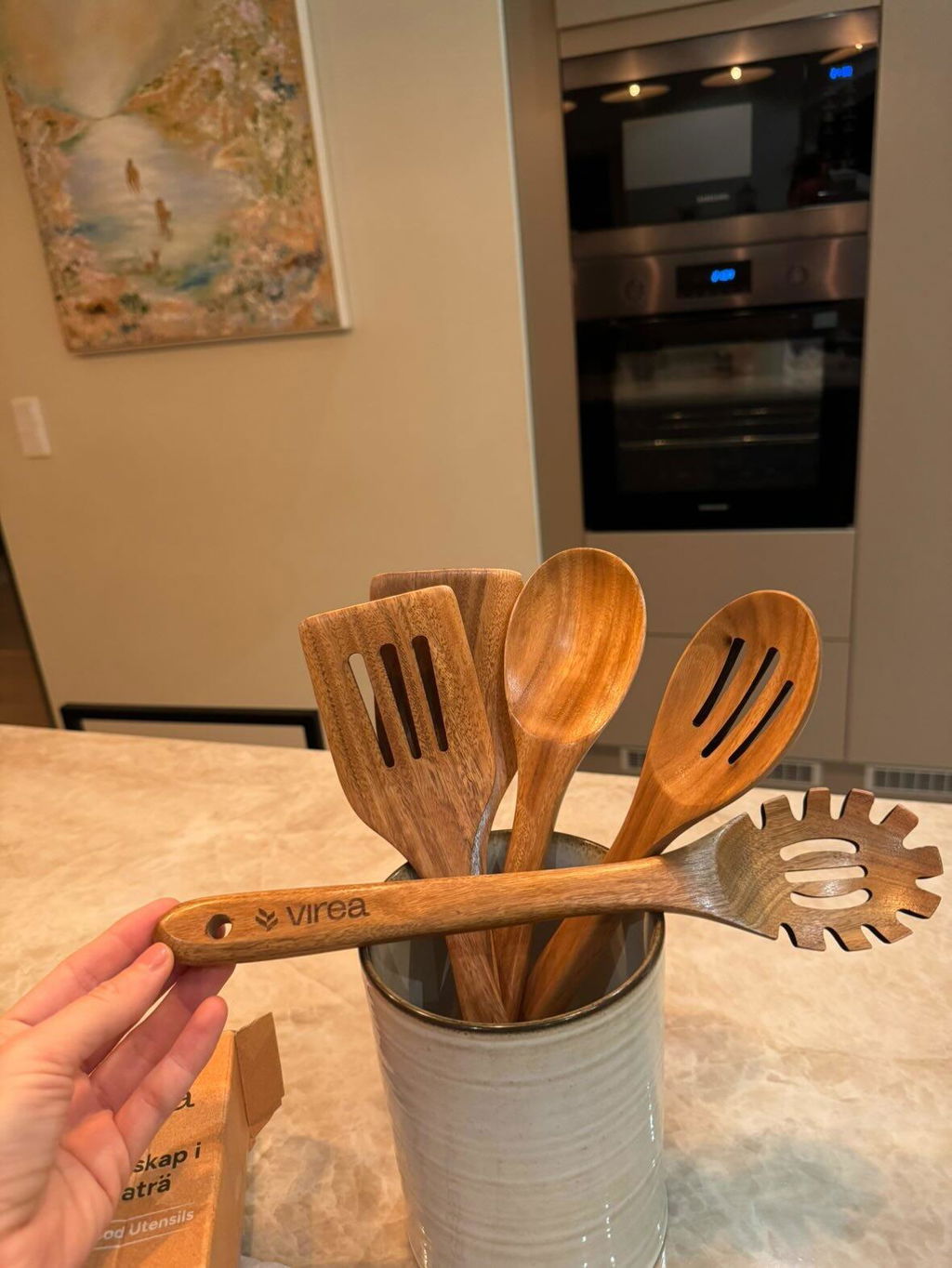
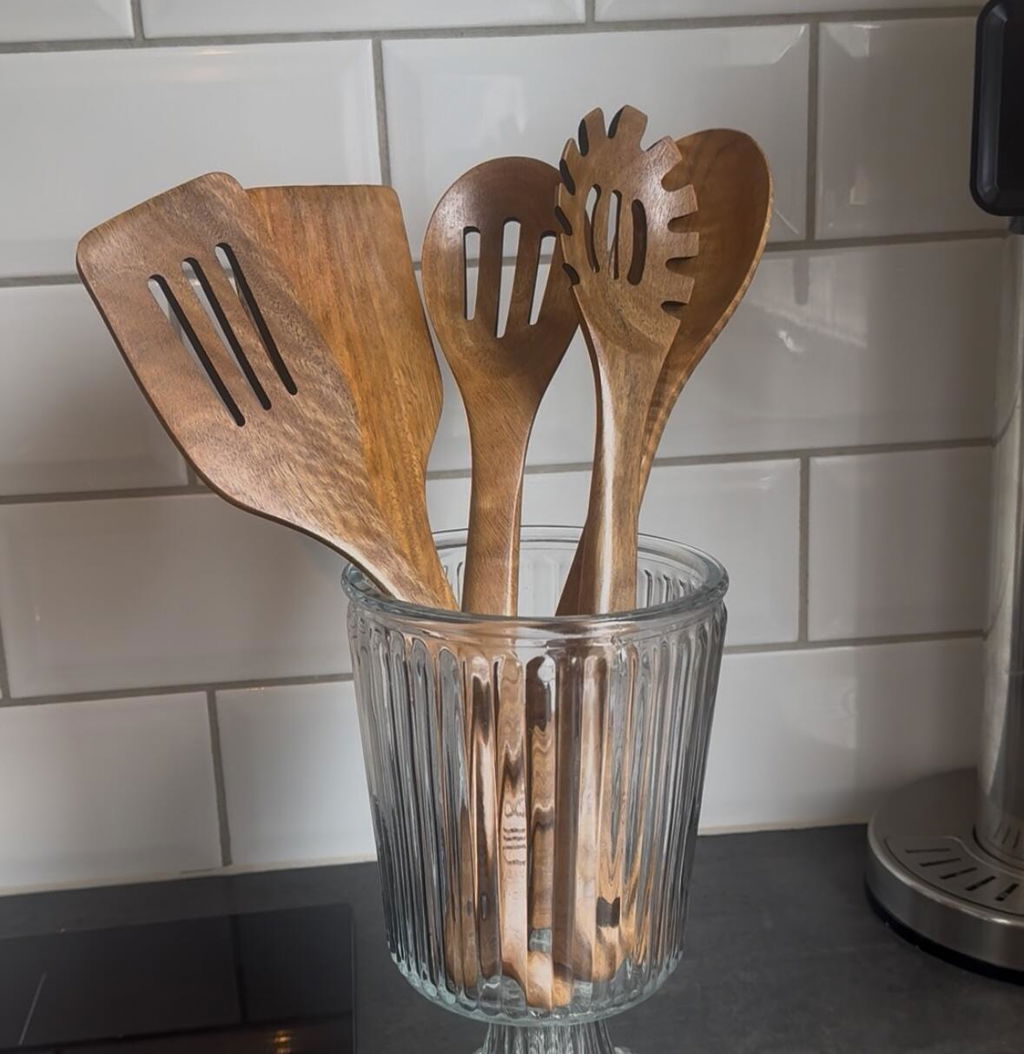
Kitchen utensils in Acacia wood 5-pack
So beautiful and practical, also feels much better than plastic!
Limited offer!
- ✔ Gentle on non-stick coatings
- ✔ No harmful chemicals or microplastics
- ✔ Naturally antibacterial
- ✔ Lasts longer and becomes more beautiful over time
Advantages of Acacia wood:
Acacia wood is not only durable – it also grows faster than many other types of wood.This makes it a more sustainable choice for the environment, while its unique grain gives each utensil a beautiful and lively character.
Why choose wooden utensils?
| Feature | Our Wooden Utensils | Plastic Utensils |
|---|---|---|
| Plastic-free |
Yes
|
✕
No
|
| Releases harmful chemicals |
No
|
Yes
|
| Gentle on non-stick |
Yes
|
✕
No
|
| 30 days guarantee |
Yes – try risk-free
|
✕
No
|
Tested & Certified
Our products meet the highest quality standards. From research and ingredient selection to manufacturing and rigorous testing, we go beyond the ordinary to deliver a safe and effective product you can trust.
Certified by TüV
Sustainable forestry
FCM Certified



Vi värnar om ett ansvarsfullt skogsbruk och är stolta varumärkeslicensinnehavare av FSC® – Forest Stewardship Council. FSC-N004853. Leta efter våra FSC-certifierade produkter.
Thousands of satisfied customers!
These are good :)
Acacia wood is beautiful and more robust than teak. A top-quality product!
Beautiful!
Works well and feels especially good to replace as much plastic as possible.
Works well
Works really well, I wash mine in the dishwasher and haven't had any problems so far, just make sure to oil them occasionally. Satisfied!
Have replaced all the plastic in the kitchen
Perfect for anyone who wants to replace plastic with more sustainable alternatives. Sturdy and great :)
Frequently asked questions
We recommend rinsing them before first use. For a longer lifespan, you can occasionally oil the wood with a neutral food-safe oil.
Recommended products
Handpicked for you
 Sold out
 Sold out
 Sold out
 Sold out

5 Fakta om Mikroplaster
- 1. Mikroplaster kan tränga in i våra organ och har hittats i människors blod, lungor och till och med moderkakor.
- 2. De innehåller och absorberar giftiga kemikalier som kan störa hormonbalansen och påverka fertilitet.
- 3. När fiskar och djur får i sig mikroplaster hamnar de i näringskedjan – och till slut på våra tallrikar.
- 4. Mikroplaster bryts inte ner i naturen och kan spridas till jord, vatten och luft – för alltid.
- 5. Barn och bebisar är extra utsatta, eftersom deras kroppar är mer känsliga för plastrelaterade toxiner.